Independent practical guide

Does Pet Insurance Cover Heart Murmur?

Follow the first recorded murmur through the policy timeline and itemized cardiac workup before predicting reimbursement.

Policy-first Independent Useful checks
Key checks

What matters on this page

Use these checkpoints to frame the literal question before reading the full guide.

Clinical distinction Finding versus diagnosis Workup can establish the cause
Insurance timeline First notation matters Not only the diagnosis date
Invoice Review each service No automatic blanket answer
Direct answer

Pet insurance may cover eligible tests and treatment associated with a heart murmur, but the answer depends on the policy and when the finding or related signs first appeared. A murmur is a sound found during examination, not automatically a confirmed heart-disease diagnosis. A later diagnosis does not by itself make an earlier documented finding new.

The sections below show how to verify the answer and what can change it.

Locate the first notation and the pre-existing definition

Cornell describes a murmur as an additional heart sound and explains the role of echocardiography in evaluating cardiac status. Let the veterinarian interpret what it means for this animal. For insurance, collect the dated examination note, any earlier signs, the policy effective date and relevant waiting requirements. Do not equate a benign-sounding description, a low grade or lack of symptoms with a coverage decision.

Read whether the policy definition refers to signs, symptoms, advice or testing before diagnosis. Then ask how that language applies to the actual history. An insurer’s general statement about covering illnesses cannot answer whether this murmur or a later related condition is excluded. Keep the question attached to the record rather than asking only whether heart disease appears on a marketing list.

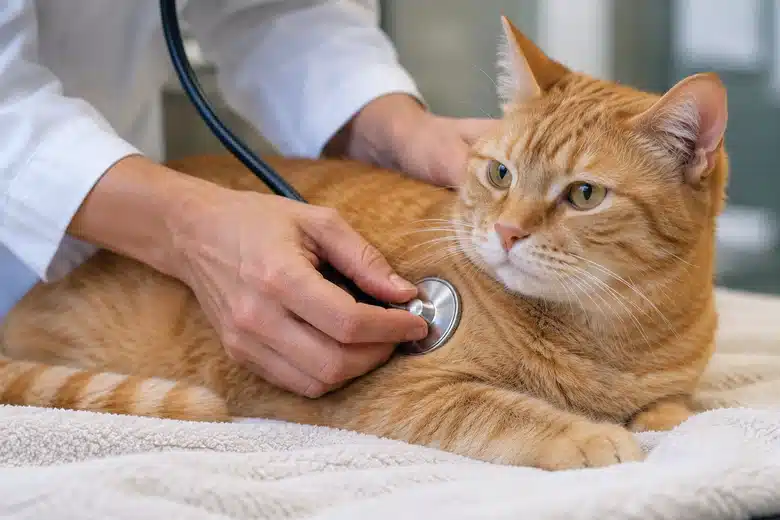
Veterinarian listening to a calm ginger cat’s chest with a plain stethoscope
A dated examination note helps distinguish a first finding from a later diagnosis.
Evidence matrix

Audit the cardiac workup item by item

Invoice item Indication / history Relevant provision Inclusion / exclusion evidence Unresolved question
Auscultation at an exam First or repeat murmur notation Examination-fee and preventive terms Locate exam benefit or exclusion Was this routine screening or illness evaluation?
Cardiology consultation Referral following the finding Specialist and exam-fee definitions Read the consultation provision Is the consult fee eligible separately?
Echocardiogram Vet-recommended assessment Diagnostic-testing and prior-condition terms Connect indication to timeline and clause Does an earlier notation affect this test?
Follow-up assessment Monitoring after workup Ongoing-condition, renewal and limit terms Review diagnosis and prior decision Are repeat tests eligible and medically indicated?

Auscultation at an exam

Indication / history First or repeat murmur notation
Relevant provision Examination-fee and preventive terms
Inclusion / exclusion evidence Locate exam benefit or exclusion
Unresolved question Was this routine screening or illness evaluation?

Cardiology consultation

Indication / history Referral following the finding
Relevant provision Specialist and exam-fee definitions
Inclusion / exclusion evidence Read the consultation provision
Unresolved question Is the consult fee eligible separately?

Echocardiogram

Indication / history Vet-recommended assessment
Relevant provision Diagnostic-testing and prior-condition terms
Inclusion / exclusion evidence Connect indication to timeline and clause
Unresolved question Does an earlier notation affect this test?

Follow-up assessment

Indication / history Monitoring after workup
Relevant provision Ongoing-condition, renewal and limit terms
Inclusion / exclusion evidence Review diagnosis and prior decision
Unresolved question Are repeat tests eligible and medically indicated?

Three timelines that need different answers

In the first hypothetical timeline, a routine exam records a murmur before insurance starts and an echocardiogram identifies a condition afterward. The later test date does not establish a new onset. Request the insurer’s reasoning about the relationship between the earlier finding and later diagnosis, with the relevant policy wording.

In the second timeline, records before enrollment show no murmur or related signs, and the first finding occurs after all applicable waiting requirements. That supports a different timing analysis, but does not guarantee payment: the test, exam charge, condition and limits still must qualify. Absence of an earlier note is one piece of evidence, not a promise.

In the third timeline, a veterinarian documents that a prior murmur was innocent and a later problem may be unrelated. Ask for the medical explanation and the insurer’s application of its definition. Do not treat all murmurs as one disease, but do not assume every later diagnosis is unrelated simply because it has a different name.

Compare with the details in front of you

Ready to check current rates?

Keep policy terms, deductible, reimbursement and limits beside the quote so the comparison stays consistent.

Find Insurance for Your Pet

Ask for a written, itemized answer

Checklist

Useful questions to send through the insurer’s official channel

Which dated observation is being used as the first relevant sign?
Which exact definition or exclusion applies to that observation?
Are the specialist consultation and echocardiogram assessed separately?
What additional medical records would change or clarify the analysis?
What appeal or review process applies if the medical relationship is disputed?

Keep the cardiologist’s report, referring vet’s note, itemized invoice and explanation of benefits together. If a charge is excluded, identify whether the reason is history, service category, timing or a financial limit. Those are different reasons and require different supporting evidence.

Care comes before the coverage argument

Follow veterinary advice about evaluation and urgency. Do not postpone recommended assessment merely to move a test beyond an insurance date, and never ask for records to be altered to create eligibility.

FAQ

Common questions

Does a murmur always mean heart disease?

No. It is a clinical finding whose significance requires veterinary interpretation and sometimes further testing.

Will a diagnosis after purchase always be covered?

No. The policy may consider earlier signs or findings, and the service must otherwise satisfy its terms.

Sources & editorial standards

Independent references

These links provide independent government, academic or reference background. Actual policy wording controls insurance eligibility, benefits and claims.

Pet Insurance Lens

Ready to compare with clearer inputs?

Keep the policy terms beside the price, then continue to rates when the comparison is clear.

Explore Pet Insurance Plans